Melanated Armor
As the night begins to quiet down, I sit with myself, not reaching, not overthinking, just existing.
Because when I think about men, when I think about protectors, I don’t think about surface-level roles. I think about design.
A question comes to mind, one that has followed me for a long time: Who protects the protector? And even deeper than that…who nurtures them?
When I sit with that question, I think about the way the Most High created man with intention. The same way He created women with intention. Masculine and feminine, not in competition, but in alignment…both necessary, both sacred, both contributing to the ecosystem of life. Somewhere along the way, that balance has been misunderstood. Not just socially, but spiritually and structurally. Because masculinity, in its truest form, is not force, it’s foundation. It’s awareness, responsibility, and protection. And that kind of protection carries weight.
A protector is not just someone who shows up when something goes wrong. A protector is someone who is constantly aware, thinking ahead, reading the room, and anticipating what others may not yet see. It’s emotional steadiness when everything feels uncertain. It’s absorbing pressure so others can feel safe. It’s decision-making under stress. It’s a sacrifice often without acknowledgment. It’s also providing not just financially, but structurally. Creating stability, managing resources, navigating unexpected shifts in life. A protector becomes a pillar—and pillars don’t always get the space to bend.
So if someone is always holding everything up… who is holding them?
As a woman, I had to sit with that honestly.
Because vulnerability has always been more accessible to us. There are more spaces, more languages, more acceptance around how we express ourselves. But for men, that space isn’t always there. What’s often placed in front of them—sports, money, performance—those are outlets, but they are not always spaces for release. I’ve always wondered who asks them how they’re doing, not casually, but intentionally.
That’s something I started practicing in my own life. With my dad. With my brothers. Even with myself first. Just asking, “Where you at?” On a scale from one to ten, and then actually listening. Because sometimes, being heard is the release.
When I trace that awareness back, it always leads me to my father. Losing my mom at 13 shifted my world in ways I’m still learning from. But what remained, what stayed steady, was my dad. He wasn’t perfect, but he was present. And presence, especially from a father, carries something that shapes you. In high school, I didn’t have the language for it yet, but I felt it. Walking those halls knowing my dad was there, not hovering, not loud, just present- it gave me space. Space to be a kid. Space to grow without feeling like I had to figure everything out alone. He taught me how to think, not what to think, but how. How to observe people, how to discern intention, how to move with awareness, how to carry myself with discipline.
And those lessons didn’t stay in that moment of my life. They followed me. They became a part of how I navigate the world. It wasn’t until I got older that I realized that was protection. Not loud. Not performative. But foundational. That understanding led me back to something I hadn’t revisited in years—Black Boy by Richard Wright.
First published in 1945, Wright’s story captures what it means to grow up in an environment where survival is required before safety is ever introduced. Reading it now, it hits differently. Because it shows what happens when protection is inconsistent, when structure is missing, when a young man has to figure out the world without guidance. When you place that beside what we still see today in cities like Chicago, you realize that story never fully left.
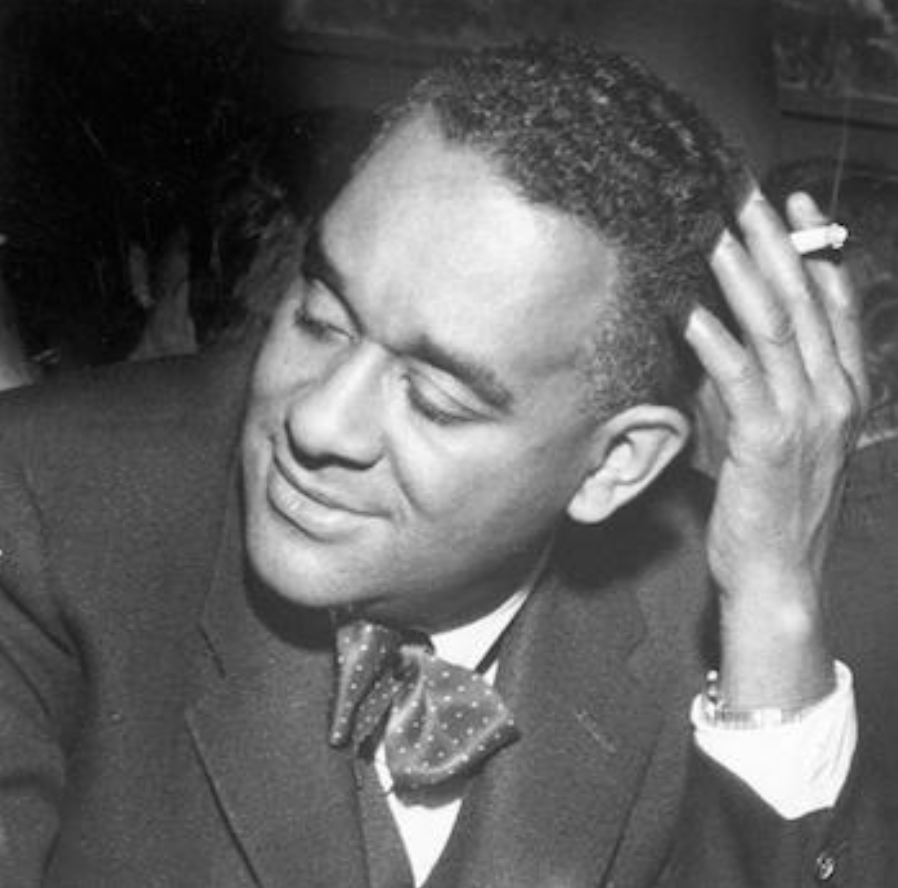
Photo Credit: Unknown
According to the CDC, homicide remains one of the leading causes of death among adolescents in the United States, alongside suicide and unintentional injuries. At the same time, data from the U.S. Department of Health and Human Services show that Black adults are significantly less likely to receive mental health treatment compared to the national average.
That contrast says a lot.
Because it raises a deeper question: how many men are carrying things they were never permitted to put down? How many have learned to survive without ever learning how to rest? That thought stayed with me, and it led me to another question:
What does it mean to feel protected, without having to ask for it?
I saw the importance of that kind of presence again recently.At the Sox game with my dad, it wasn’t even the game that stayed with me the most—it was what happened after. We were walking, and without saying anything, we switched positions on the sidewalk. He moved to the outside. I moved inside. No words. Just instinct, and that moment said everything.
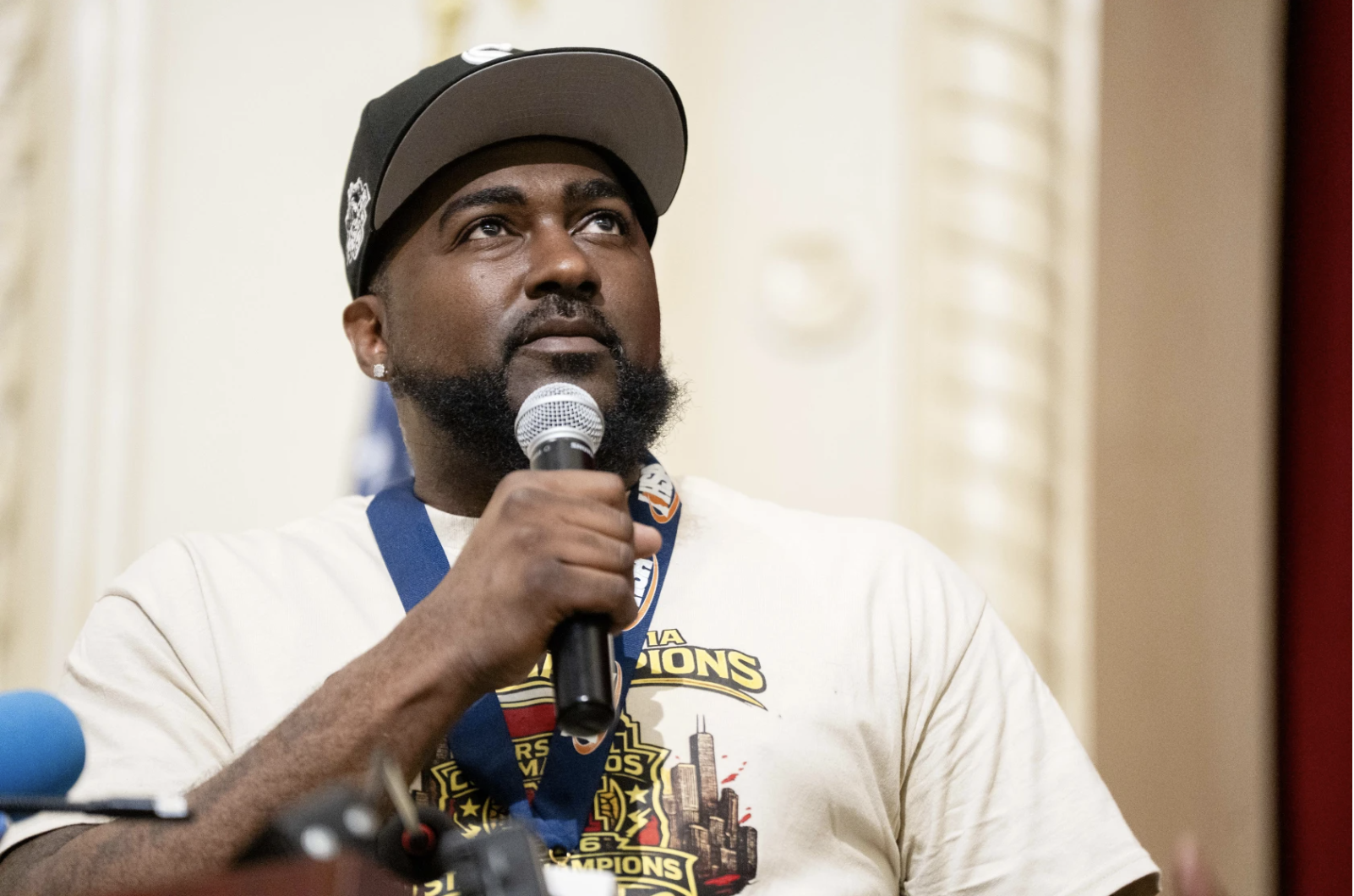
Photo: Pat Nabong Chicago Sun Times
That kind of protection doesn’t need to be announced. It’s understood. I saw that same understanding again at Marshall, watching the boys win state. Shoutout to Coach Darian Lay and that program, because that wasn’t just about basketball. That was discipline, accountability, and structure. In speaking about the win, he emphasized that the moment was bigger than the team itself, noting that the championship was for the West Side of Chicago.
And that stayed with me.
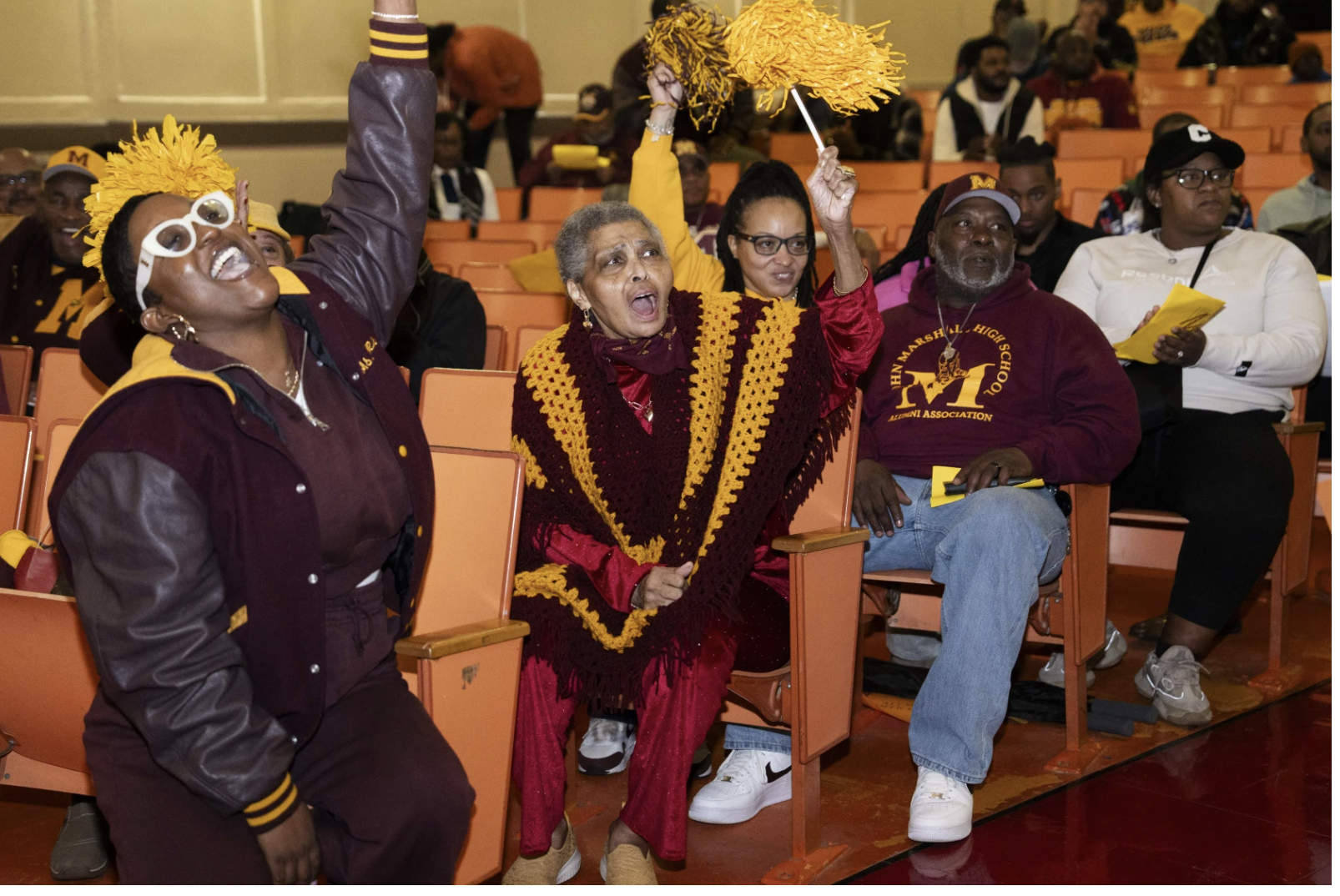
Photo: Pat Nabong The Chicago Sun Times
Because you could feel that this wasn’t just about a title, it was about impact. Those young men were being shaped in real time. And it made me realize something clearly: before titles, before recognition, before visibility, there are men quietly building. Men who are community architects. Protectors of the people. From the youth to the elders. And when you begin to recognize that, you start to see the work differently.
You start to notice the men who are choosing to show up consistently and intentionally, without needing to be seen for it. And that kind of presence deserves acknowledgment, because that’s where the work lives. Organizations like Peace Runners 773, founded by Jackie Hoffman, reflect that commitment. What began in Chicago as a running initiative has grown into a movement centered on health, discipline, and community. Through weekly runs, community engagement, and global outreach, it creates structure in spaces where consistency is often lacking, reinforcing the idea that wellness is not a luxury; it’s a necessity.
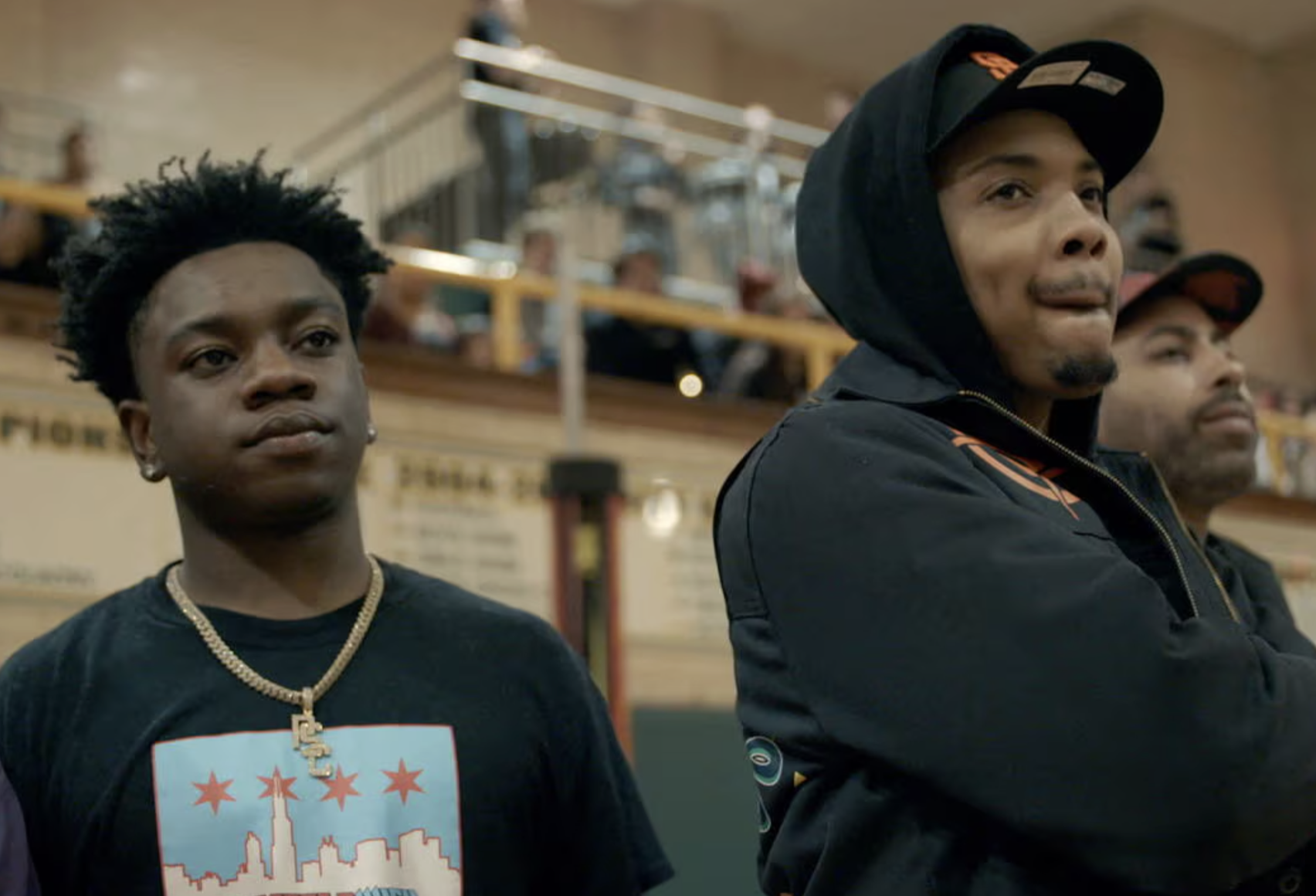
Photo: National Basketball Association
Project SWISH, founded by McKinley Nelson, takes a similar approach through basketball, using the sport as a tool for mentorship, development, and healing. With structured programming and active summer registrations, the organization provides young people with alternatives to violence while helping them build identity and purpose.
The Pressure Foundation, founded by Marshall alum and state champion Ardarius Simmons, brings that impact full circle. Rooted in giving back to the same community that shaped him, the foundation focuses on youth development through sports, creating access, discipline, and opportunity for the next generation. Also, spaces like Coffee, Hip Hop & Mental Health, founded by Christopher Lamarck, provide something equally vital—a place to exist, to express, and to be heard. A space where conversation, creativity, and mental health intersect, reminding people that presence alone can be healing.
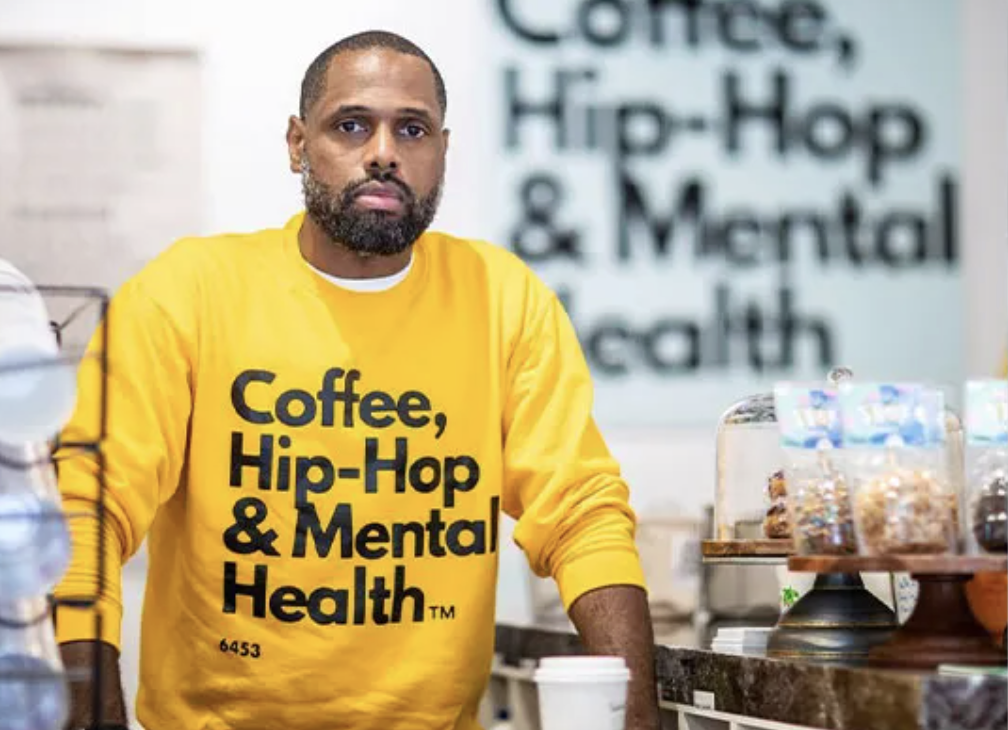
Photo: Heidi Zeiger
When you step back and look at all of this together, you begin to understand something deeper:
Protection doesn’t always look like defense.
Sometimes it looks like guidance, sometimes it looks like consistency, or sometimes it looks like creating spaces where people don’t have to operate in survival mode. That realization followed me into Roux.
Sitting in Hyde Park, I found myself observing families move through the space, watching conversations unfold, watching fathers interact with their children. What stood out wasn’t anything grand. It was the ordinary moments. A father helping his daughter order her meal. A son counting money before walking to the register. Families laughing over dinner. Moments that might seem small at a glance, but they carry something much deeper. Some of the most important forms of protection happen long before a crisis ever arrives. They happen in presence, in consistency, in the everyday moments where confidence, discipline, and identity are quietly being passed from one generation to the next.
Because it’s the small things… that are major, and in that moment, I reflected on my own life—on what I’ve had, what I’ve seen, and what I refuse to take for granted.
So I come back to the question.
Who protects the protector?
And what happens when we create space for them to be supported too?
Because if we get that right, we don’t just change individuals; we change communities.
Get Involved With The Movement:
https://projectswishchicago.com/pay-it-forward
https://www.instagram.com/pressurefoundationchicago/
https://peacerunners773.com/about#/
Photo(s): Unknown, National Basketball Association, Pat Nabong of The Chicago Sun Times, Heidi Zeiger
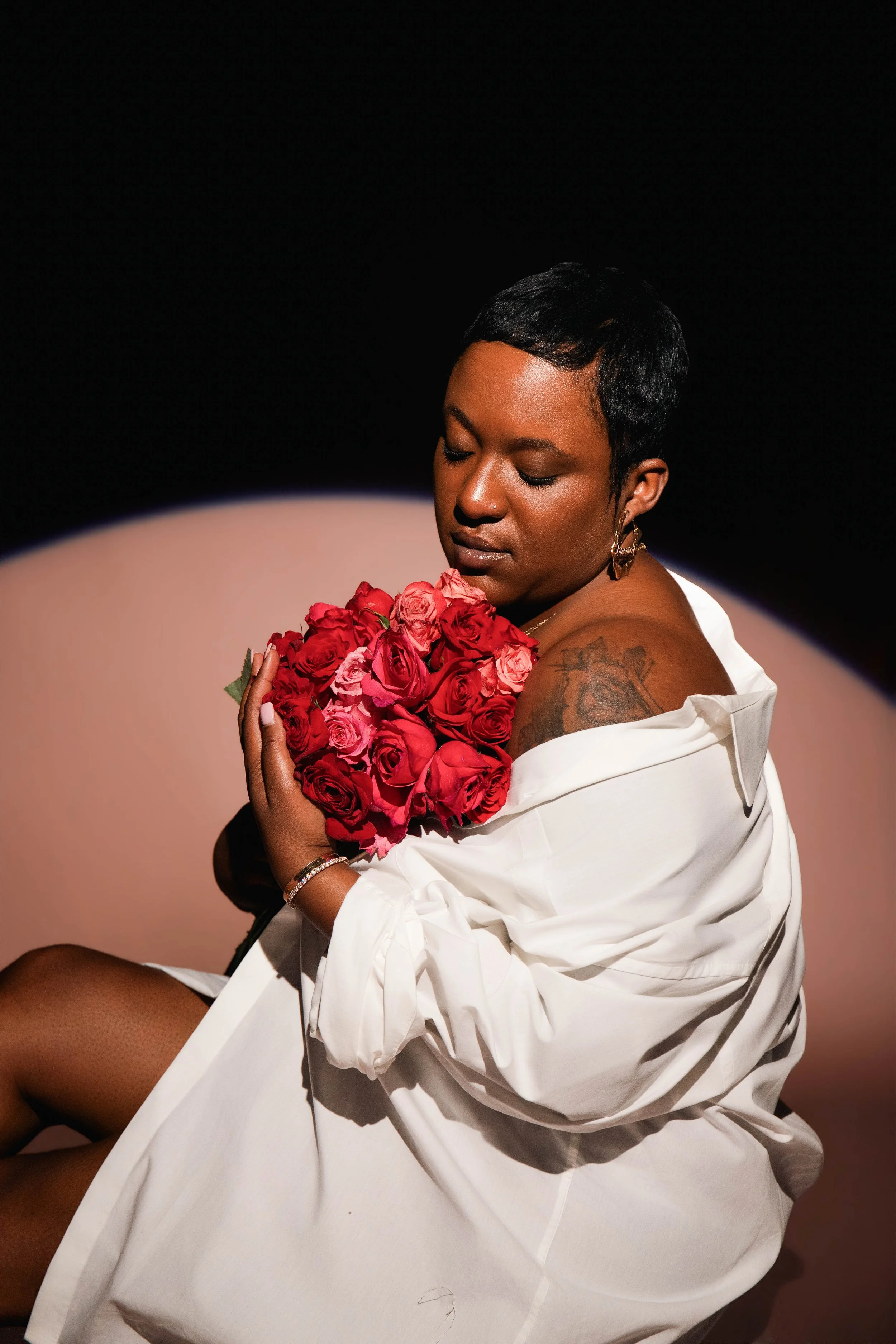
Held in The Heat
Stillness, surrender, and the spaces that allow us to hear ourselves again.
There are moments in life where the noise softens long enough for us to finally hear ourselves clearly. Not the version of ourselves shaped by performance or strengthened solely by survival, but the real version beneath the pressure, beneath expectation, beneath the constant need to carry everything in silence. Lately, I’ve found myself sitting with a question: What if the life we are trying so hard to hold onto is the very thing preventing us from truly living?
Somewhere along the way, many of us learned how to hold on. We learned how to stay strong, and while strength is a blessing from the Most High, perhaps we were never designed to carry what no longer nurtures us. What we hold onto eventually settles somewhere within us. It settles in the body, in the nervous system, in the emotions we suppress, and in the environments we remain loyal to long after we have outgrown them. Eventually, the body remembers what the spirit has been trying to release.
Maybe that is where the shift begins. Not in becoming someone entirely new, but in finally surrendering to what was already placed within us. Surrender is often misunderstood because people associate it with weakness or defeat, but surrendering to purpose is not weakness. It is alignment. It is trusting that what was placed within you was never random.
The Most High does not move recklessly. The gifts placed within us, the ideas, the convictions, and the quiet pull toward something greater all exist intentionally. Sometimes, the purpose is not revealed all at once. Sometimes it arrives through small and intentional seeds planted through patience, stillness, and lived experience. Before you know it, you look up and realize you were becoming the whole time. That realization has been sitting with me deeply lately. The Most High has a way of leading us into spaces that allow us to hear ourselves more clearly, spaces where we are not constantly being pulled, pressured, or consumed by expectation. Spaces where presence becomes possible again. Lately, for me, that space has been the sauna.
The sauna is not just heat. It is reflection, stillness, and release. It allows the body to reset and return to itself, not only physically, but mentally, emotionally, and spiritually. Recently, while sitting in a sauna surrounded by melanated women of different ages, shades, and walks of life, something shifted in the room. Many of the women worked in healthcare. Accomplished women. Educated women. Women carry years of service, responsibility, and lived experience within them.
As one woman began speaking about her work as an occupational therapist, the room became something deeper than conversation. We almost forgot it was a sauna. She spoke about traveling with her husband while simultaneously building in real estate together, and she spoke about feeling called toward something beyond the systems she currently worked within. There was a quiet conviction within her words, the kind many of us recognize immediately because we have felt it too.
The question lingered throughout the room: Am I living from what was placed within me, or what was placed around me?
None of us rushed to answer it because many of us understand what it feels like to outgrow environments that once felt necessary. Many of us know what it feels like to recognize that certain systems were never truly designed with us in mind. As the women continued speaking about healthcare disparities, lived experiences, and the emotional realities of serving within those systems as melanated women, the conversation deepened even further.
Stories like Henrietta Lacks remind us that melanated bodies have long existed at the intersection of contribution and exploitation. Her cells advanced modern medicine in immeasurable ways, yet her story also reflects the painful reality of how melanated women’s bodies have historically been used, studied, and separated from consent, recognition, and care. Those realities did not disappear with history. Even now, melanated women continue to face alarming disparities in healthcare. Across the United States, melanated women experience disproportionately high maternal mortality rates regardless of education, financial status, or access to resources. Many still encounter delayed diagnoses, reduced access to quality care, dismissed pain, and medical environments where their voices are questioned instead of trusted. That should concern all of us because when we speak about health, we are talking about more than the body. We are talking about access, safety, trust, and recognition. We are talking about what it means to be fully seen and fully cared for. And while those realities are heavy, there is still something deeply resilient within melanated communities. Long before systems attempted to define us, there was already brilliance, endurance, innovation, care, and spirit woven into us. That deserves acknowledgment, too.
After leaving the sauna, I found myself floating into Wagyu House tucked away in Chicago’s South Loop. The atmosphere carried a quiet kind of luxury, peaceful and intentional. Another melanated woman greeted me, and somehow we instantly found ourselves laughing together about our pixie cuts and how confidently wearing them has never been seasonal for us. It was a small moment, but meaningful. A reminder that joy, laughter, beauty, and softness are forms of restoration, too.
Over spicy beef broth, fresh salmon sushi, and sake, I found myself thinking again. Sake itself is created through fermentation, a process built through patience, care, and transformation over time. Nothing about it is rushed. And it made me wonder: What if becoming was never meant to be forced, but cultivated slowly and intentionally?
That thought led me toward another reflection entirely, toward the people quietly planting seeds every single day within our communities.
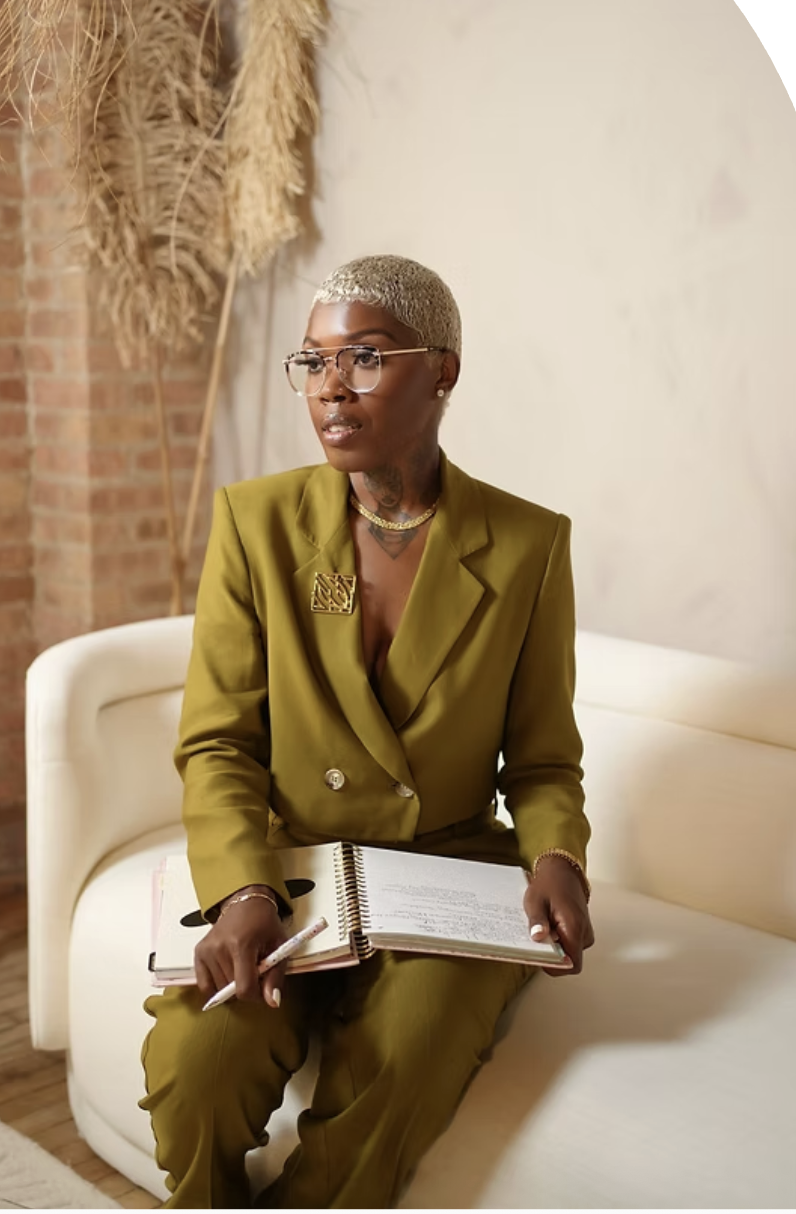
Aisha Oliver, Founder of Root 2 Fruit Youth Foundation Photo: Village Voice Consult
People like Aisha Oliver, founder of Root 2 Fruit Youth Foundation on Chicago’s West Side. Her work centers on youth development, community safety, and relationship-based support systems that meet young people where they are while guiding them toward greater possibilities. Through healthcare exposure programs, CPR training, wound care education, and hospital partnerships, young people are introduced to pathways they may never have imagined for themselves. That matters deeply to me because I understand firsthand how exposure plants seeds. Sometimes all it takes is one opportunity, one mentor, one environment, or one person believing you are capable of more. Those seeds grow.
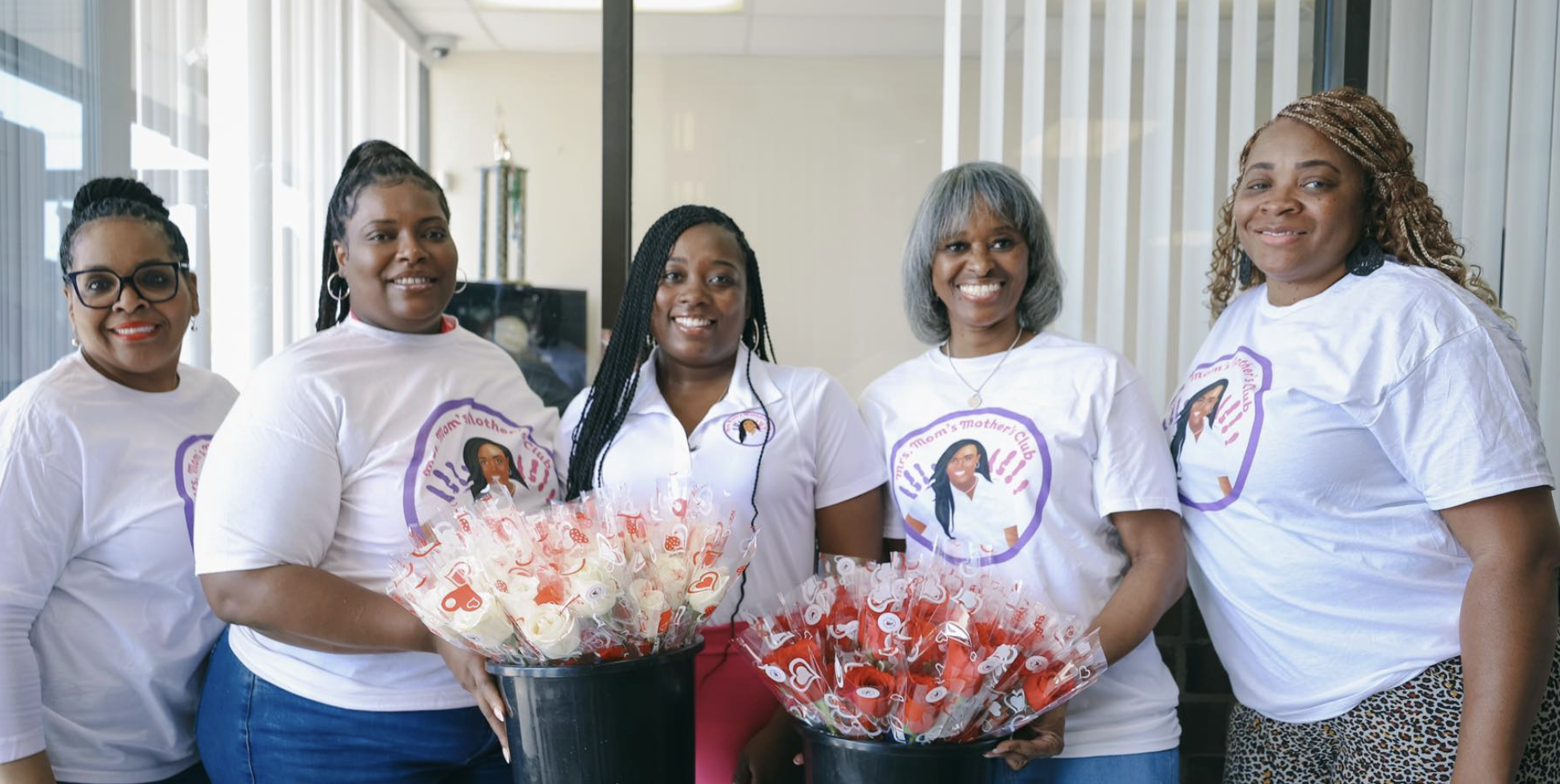
Jasmine Williams x Members MMMC Photo: Mrs. Mom’s Mother Club
The same can be said for Jasmine Williams and the work she is cultivating through Mrs. Mom's Mother Club. Her organization creates intentional spaces where women and mothers receive not only encouragement but tangible support through mental health resources, professional development, networking, and community care. As a mother of six, her work is not theoretical. It is a lived experience transformed into service. That kind of work deserves flowers, too, because when mothers are supported, families are strengthened, and when families are strengthened, communities grow stronger alongside them.
That is what The Melanated Times is about. Documenting the work. Telling our stories. Highlighting the people cultivating change quietly and consistently, whether in Chicago, Boston, or anywhere else in the world where community is still being built with intention. This is about the seed planters, the cultivators, and the people creating spaces where others can heal, grow, and recognize themselves again.
And maybe that is what being held in the heat truly means. Not punishment. Not pressure. But transformation. The kind that happens when we finally release what was never meant to stay. The kind that begins when we allow ourselves to be fully present long enough to hear what has been calling us all along.
So I’ll leave you with this:
What are you still holding onto that was never meant to stay?
And what could finally grow if you allowed yourself to live?
Get Involved with The Movement:
https://www.mrdadsfathersclub.com/about-6
Photo(s): Village Voice Consult, Mrs. Mom’s Mother Club
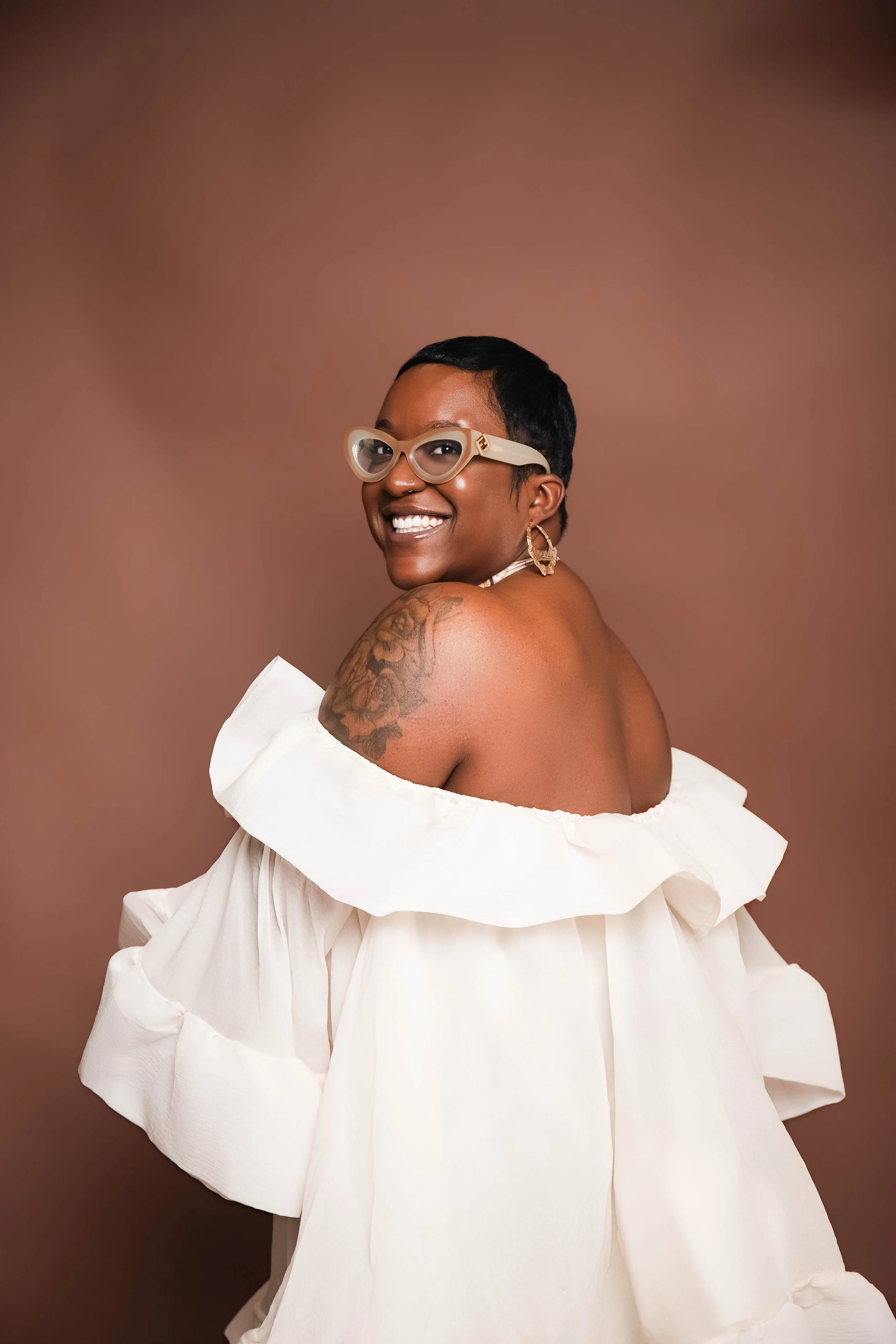
The Gift of Being Melanated
It All Begins Here
I was up early—top of the morning—sitting with my thoughts and thinking about what it really means to invest. Not just financially, but with our time, our attention, our mind, and our heart. At this stage in life, we have the ability to choose where our energy goes, and that choice carries weight. It made me pause and ask myself what it would look like if we chose, collectively, to invest in something rooted in the greater good. Not perfection, not performance, but something grounded in peace, grace, kindness, and purpose.
That reflection brought me back to the foundation of what The Melanated Times stands on. Being melanated, to me, is not just about identity in the physical sense. It is an experience, a shared understanding, a spiritual and cultural thread that runs through all of us as human beings. Some carry it more visibly than others, but the essence of being connected, of being alive, of being capable of feeling, building, and creating is something we all share. It is layered, it is deliberate, and it shows up in how we choose to move through the world.
When I speak about sowing seeds, I am speaking from an understanding that what we plant—through our actions, our words, and our approach to life—will take root in ways that extend beyond us. A seed placed with clarity, with care, with a sense of responsibility, will bear fruit. That growth is not always immediate, and it is not always visible, but it is real. In a time where so much feels misaligned, I find myself returning to that question: why not invest in something that creates real, lasting change? Why not contribute to shifting the narrative toward something that is grounded and life-giving?
That line of thought carried me into my time in Boston.
Boston is a city that meets you in layers. There are moments where it feels distant, almost unfamiliar, and then there are moments where it feels like it recognizes you before you fully understand why. That duality stayed with me as I moved through the city, especially in spaces where our melanated cousins have built and sustained culture with care.
One of those spaces was the Frugal Bookstore in Roxbury—an area deeply rooted in Black history and home to a strong presence of our melanated people. Frugal is not just a bookstore. It is a cultural landmark. Owned by husband and wife Leonard and Clarrissa Egerton, the space carries history, community, and meaning in a way that is felt immediately when you walk in. Established in 2008, Frugal has become one of the few Black-owned bookstores in the Boston area, and it operates as more than a place to purchase books.
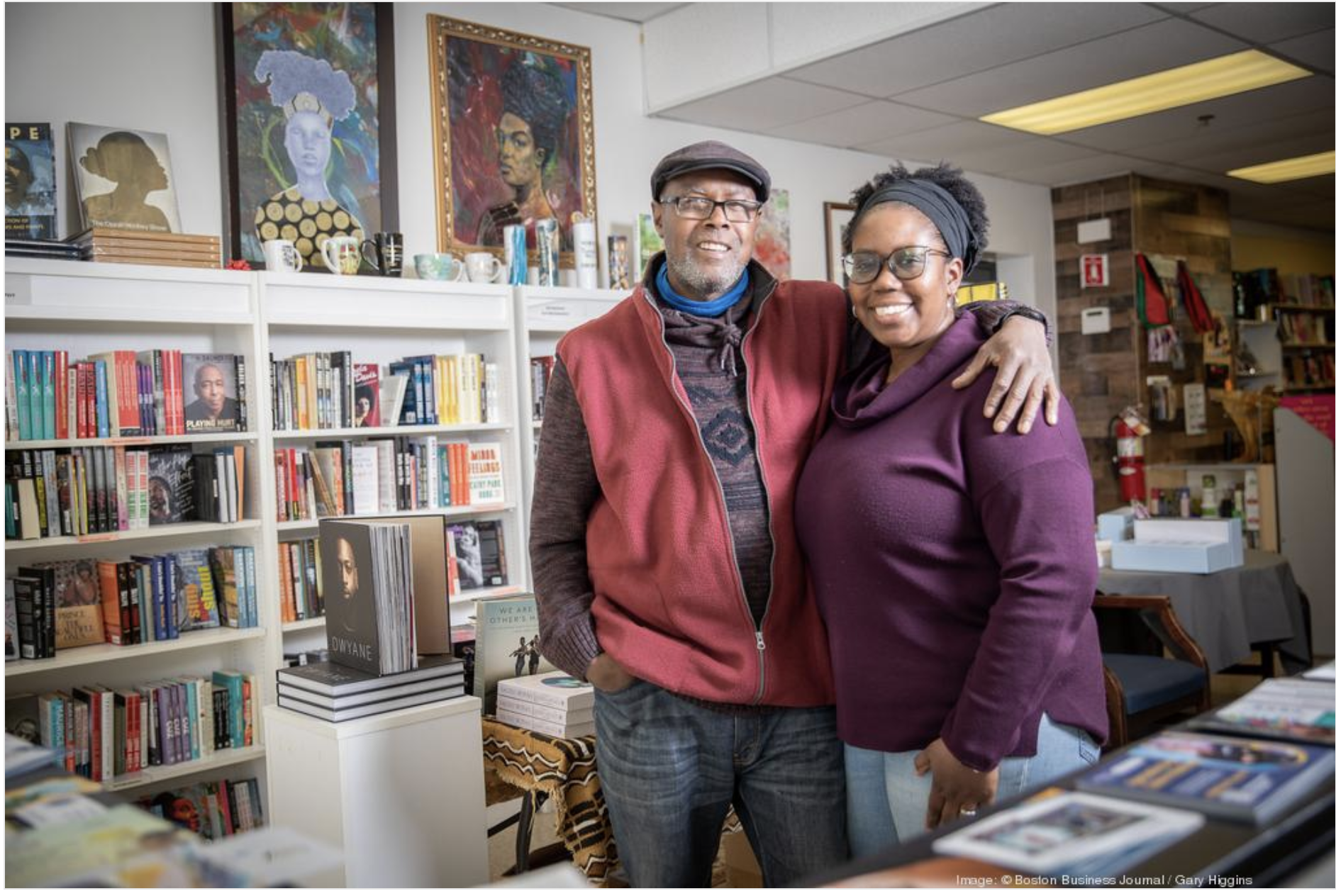
Leonard & Clarrissa Egerton Photo: Gary Higgins of the Boston Business Journal
As I stood in that space, I wasn’t just browsing shelves. I was listening. Conversations moved throughout the store in a way that felt alive. Melanated men and women speaking with passion about the books, the authors, the stories that shaped them, challenged them, carried them through different seasons of life. It wasn’t surface-level. It was lived, and it was rooted.
Hearing that lit something in me. It brought me back to the essence of something I’ve always known to be true—my first love, outside of the Most High and my parents, has always been reading.
As I moved through the aisles, I slowed down in a way I didn’t expect. There was a moment where it felt like a book wasn’t just sitting there waiting to be picked up—it was calling me, almost like it had already decided it was coming with me. That book was Make Your Way Home by our melanated cousin, Carrie R. Moore.
The collection moves through Black life across place, memory, and migration, touching the South, the Midwest, and spaces in between. It explores what it means to search for home, to carry it, to redefine it, especially when home is layered and not always fixed in one place. There is a quiet strength in the writing, a truth that does not try to soften itself, and that resonated deeply with me in that moment.
Standing in Frugal reminded me that spaces like this do not happen by accident. They are created, protected, and sustained with care. They allow room for imagination to expand, for intellect to be nurtured, and for our melanated spirits to exist without being reduced.
That same feeling followed me into MIDA.
At a sold-out Black History Month brunch benefiting the 7uice Foundation, the room carried that same level of alignment. The experience, curated by Chef Douglass Williams, moved beyond food and into something more meaningful. It was a gathering where culture, conversation, and contribution existed in the same space without needing to compete for attention.
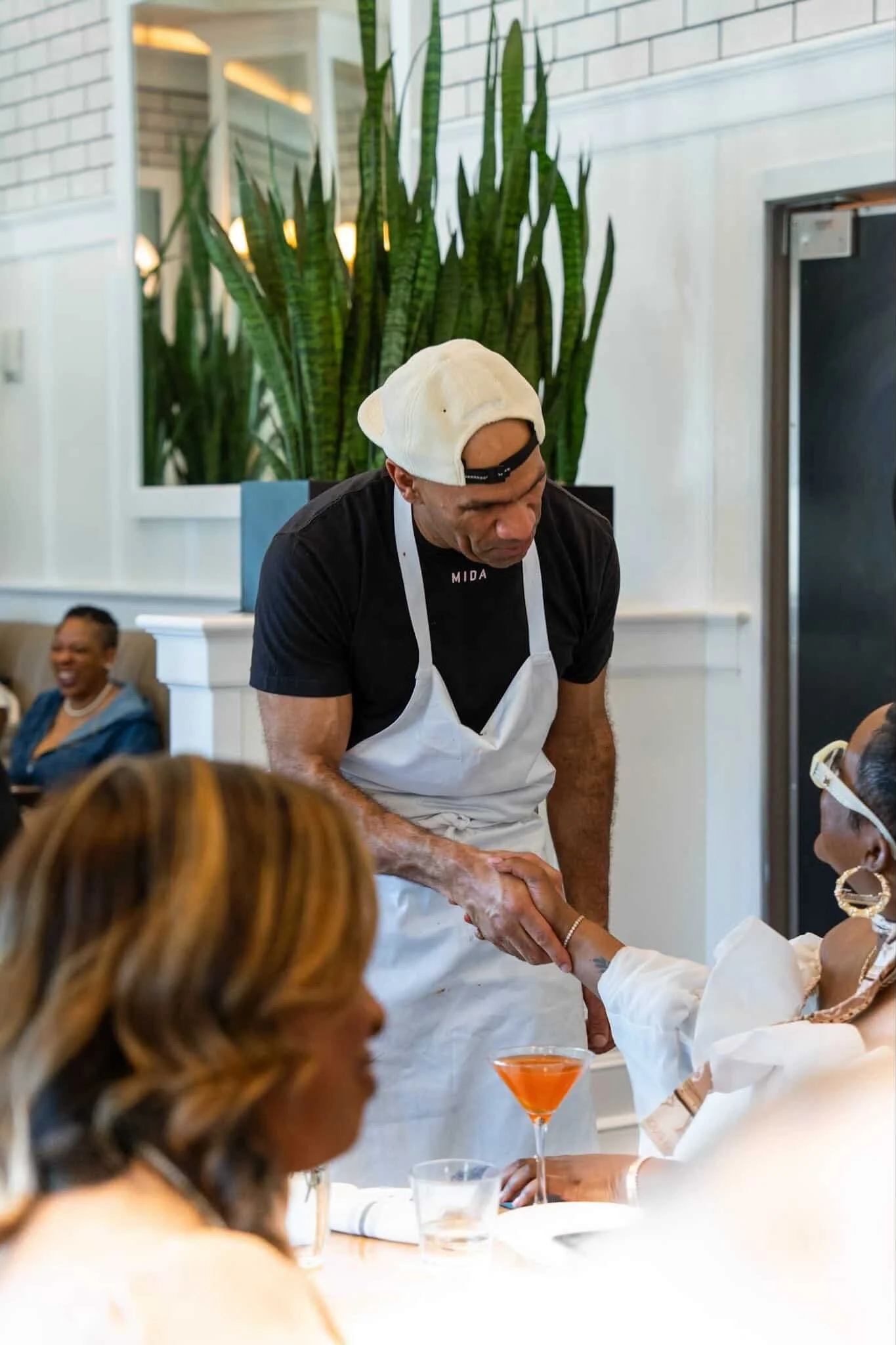
7uice Foundation x MIDA Black History Brunch Photo: Armaya Doremi
The food was filled with melanated richness—the sticky lamb ribs, the olive oil ice cream…chef’s kiss, but what stayed with me was the environment itself. It felt like a space where people could exist fully, where ideas could circulate freely, and where imagination, especially for our melanated people, was supported and protected.
That moment not only became my introduction to the 7uice Foundation, but to an ecosystem of something greater.
Founded in 2019 by Jaylen Brown alongside his mother, Mechalle Brown, who serves as Chairperson and actively stewards the foundation’s direction, the work reflects structure, care, and a clear sense of direction. Through programs like the Bridge Program, young people are introduced to pathways in entrepreneurship, financial literacy, technology, and leadership through immersive experiences that place them directly in environments designed to expand their thinking.
The work extends into STEM and education in a way that is both practical and forward-looking. Students are given exposure to institutions like MIT and are brought into spaces where innovation, research, and opportunity are actively taking place. Through college tours and programming throughout Boston, including visits to campuses such as Suffolk University and Bentley, young people are able to see, firsthand, what these environments look and feel like, which shifts how they begin to imagine their own future.
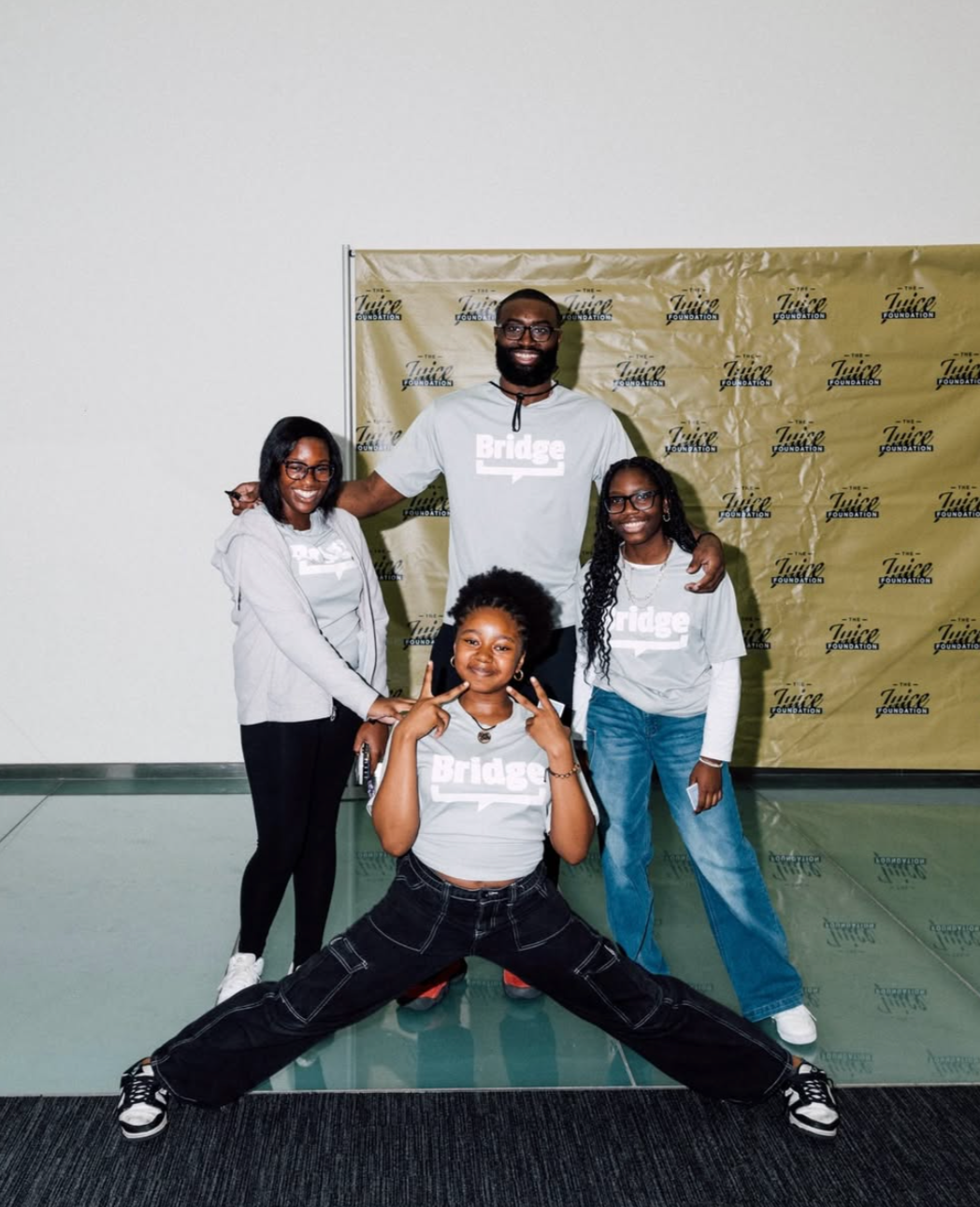
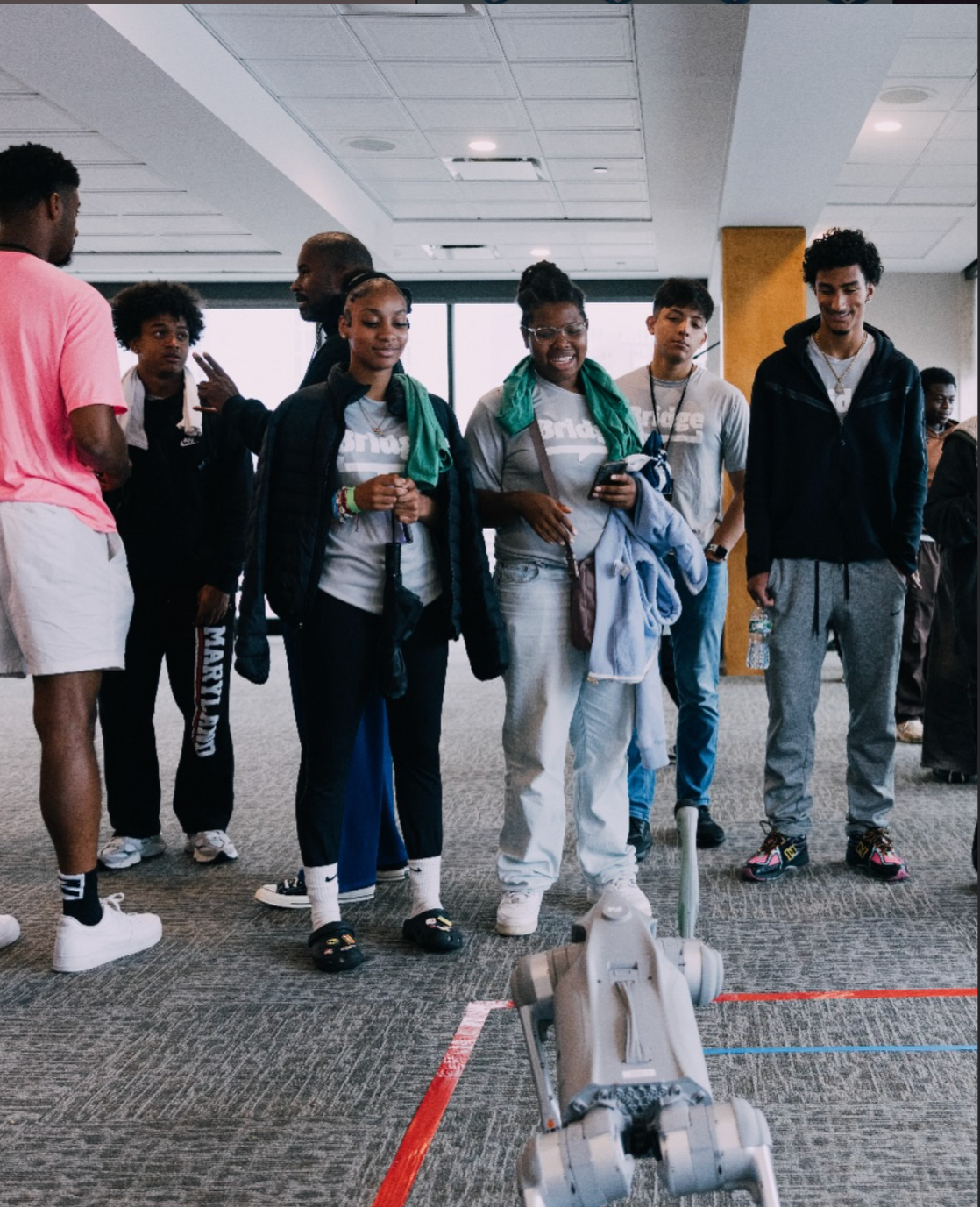
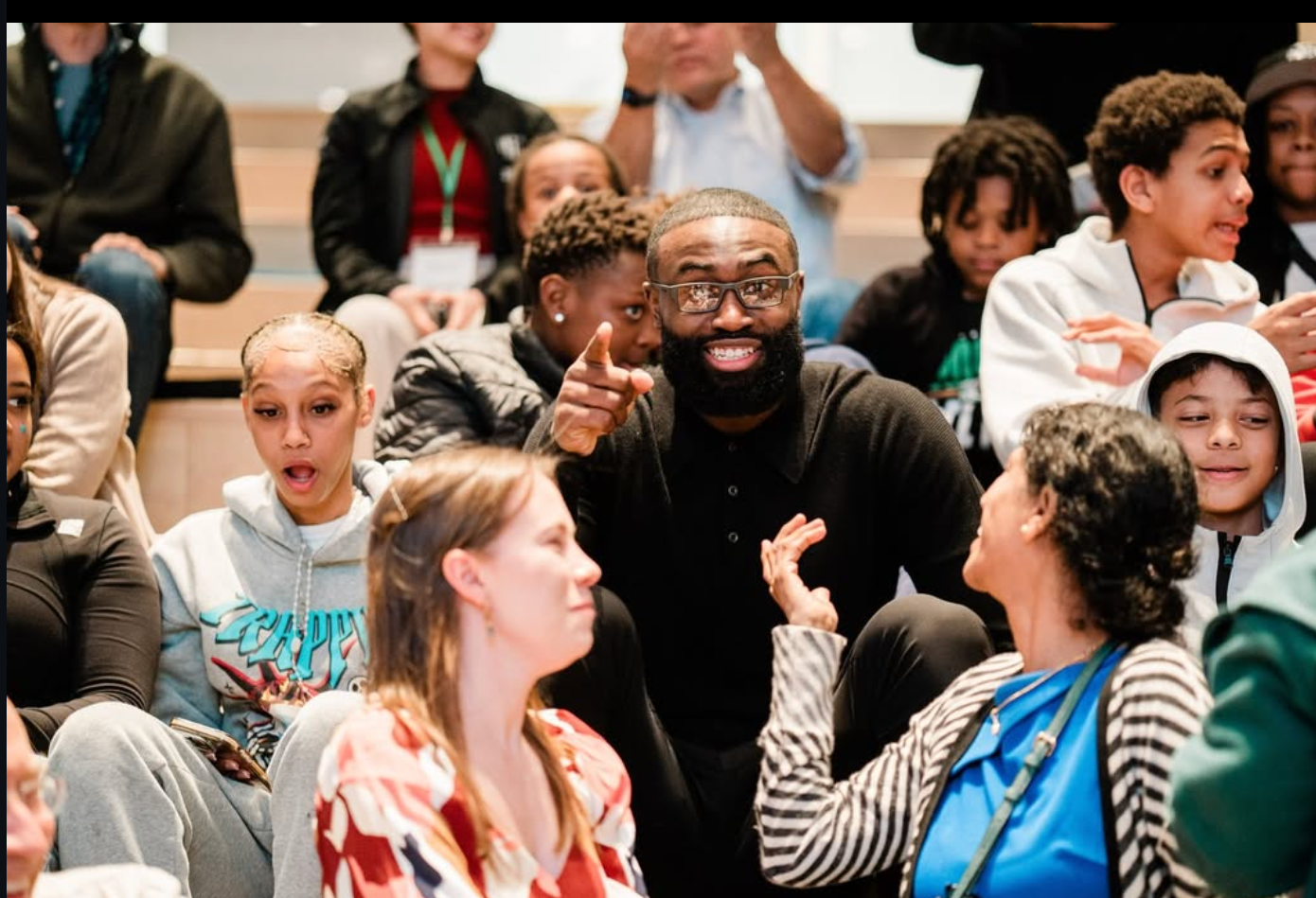
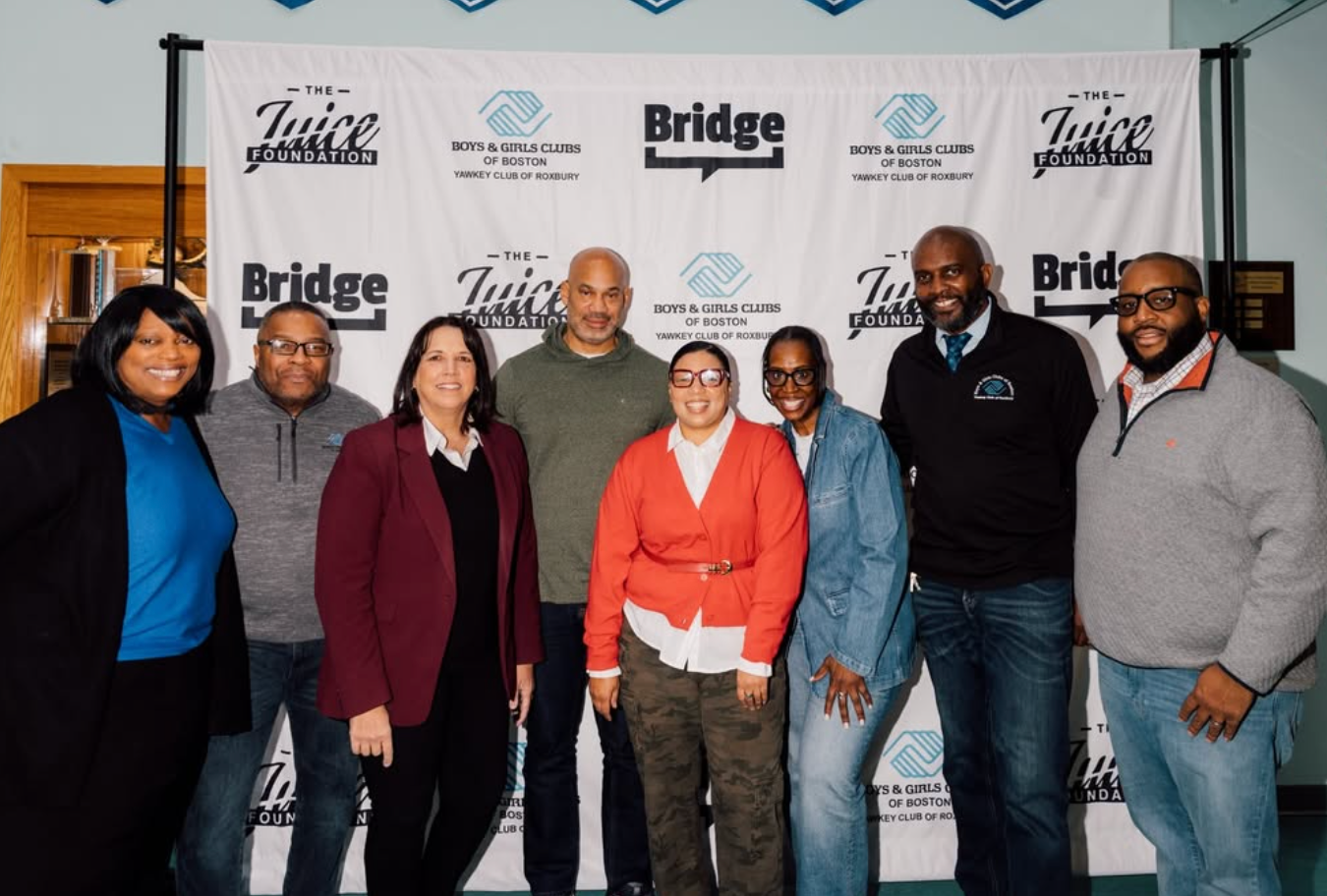
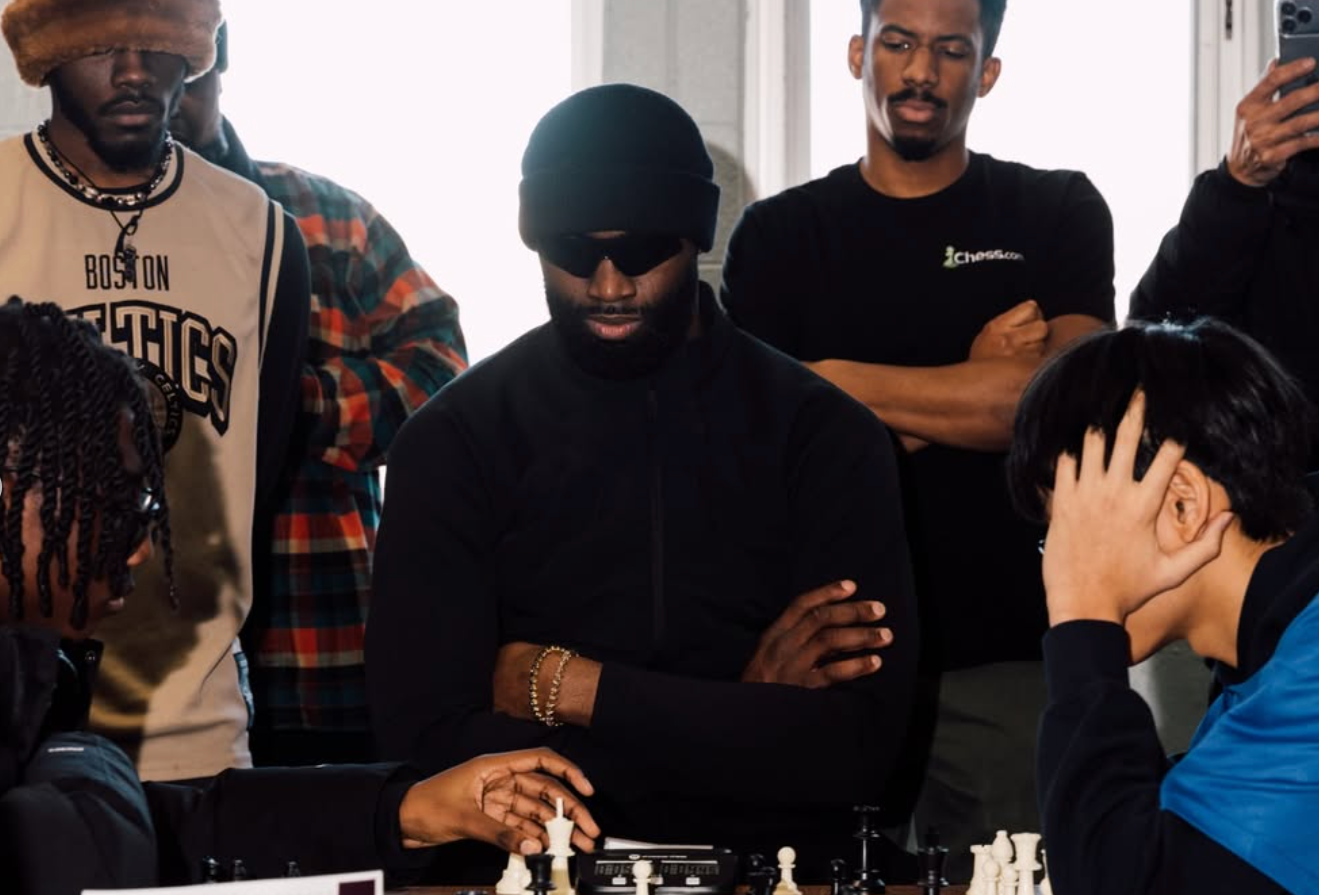
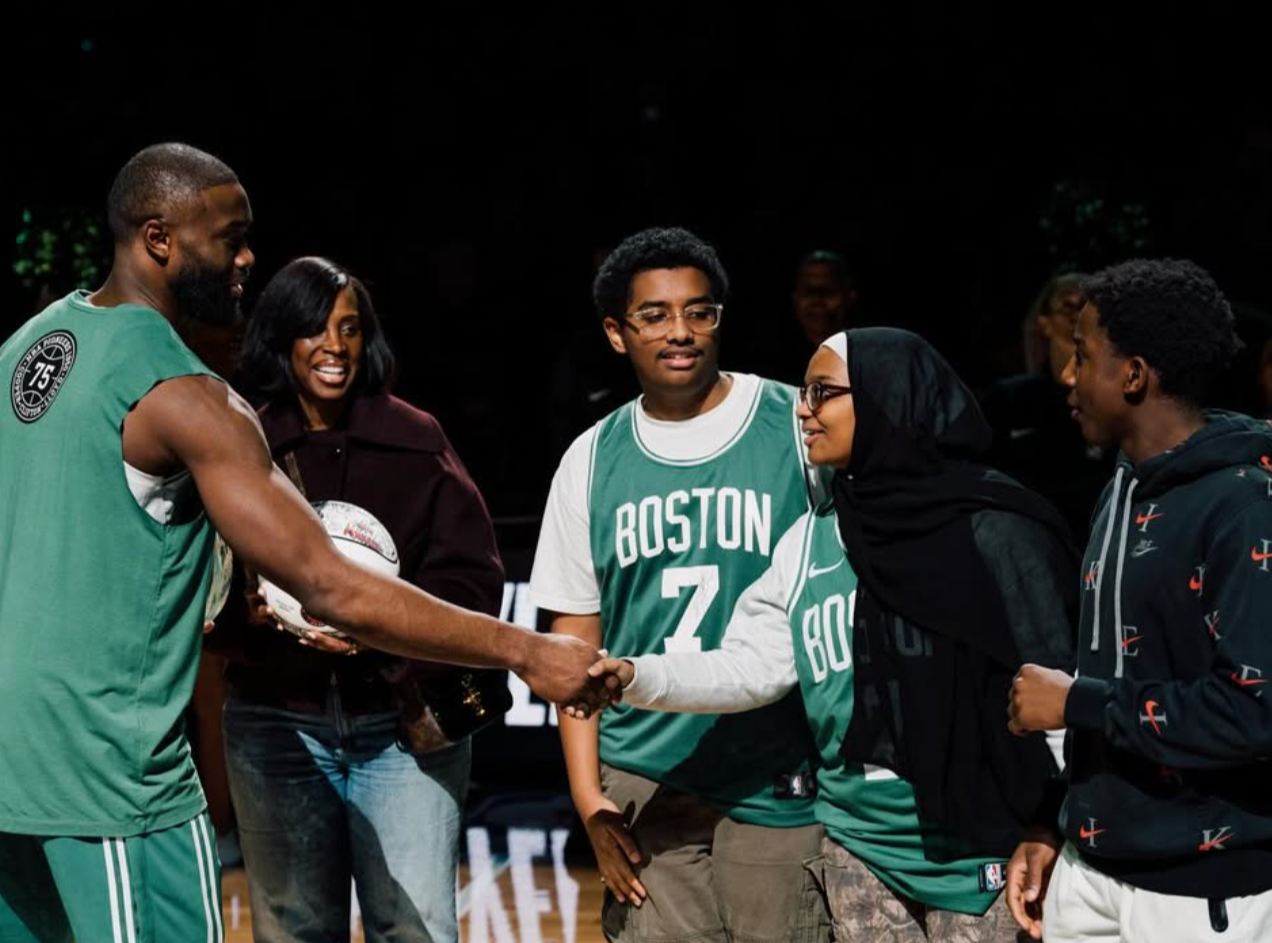

That level of exposure matters because it reshapes perspective. Growing up on the West Side of Chicago, I have seen what happens when opportunity is introduced in a real way. It changes how you think, how you move, and what you believe is possible for yourself.
When I look at what is being built through the 7uice Foundation, I do not see something temporary or surface-level. I see a framework being established, one that is meant to continue, to grow, and to create access that extends beyond the court and beyond what the mind can fathom.
That work expands further through Boston XChange, co-founded by Jaylen Brown, in collaboration with the JLH Fund founded by his former teammate Jrue Holiday and his wife Lauren Holiday, both accomplished athletes in their own right. This initiative moves into economic empowerment, creating pathways for wealth-building, entrepreneurship, and community investment within Boston. It brings together institutions, resources, and individuals in a way that supports long-term growth and community development.
What becomes clear is that this work is not isolated. It is connected. It is layered. It reflects an ecosystem that is being built with a long-term vision in mind.
Spaces like Frugal Bookstore, the 7uice Foundation, and experiences like the MIDA brunch exist as extensions of that same philosophy. They remind us that safe spaces for our melanated spirits and intellect are essential. They allow us to think freely, to imagine without limitation, and to exist without the need to shrink ourselves.
That is where real growth begins, where ideas take root, and where change becomes possible.
What I experienced in Boston was not just a series of moments. It was a reflection of what can happen when people choose to invest in something greater than themselves, when purpose is matched with action, and when community is centered in the process of building.
And that is something worth paying attention to.
Get Involved with the Movement:
https://www.the7uicefoundation.org/
Photo(s): 7uiceFoundation, JLH Fund, Boston Celtics,Gary Higgins of the Boston Business Journal

The Melanated Manifesto
It All Begins Here
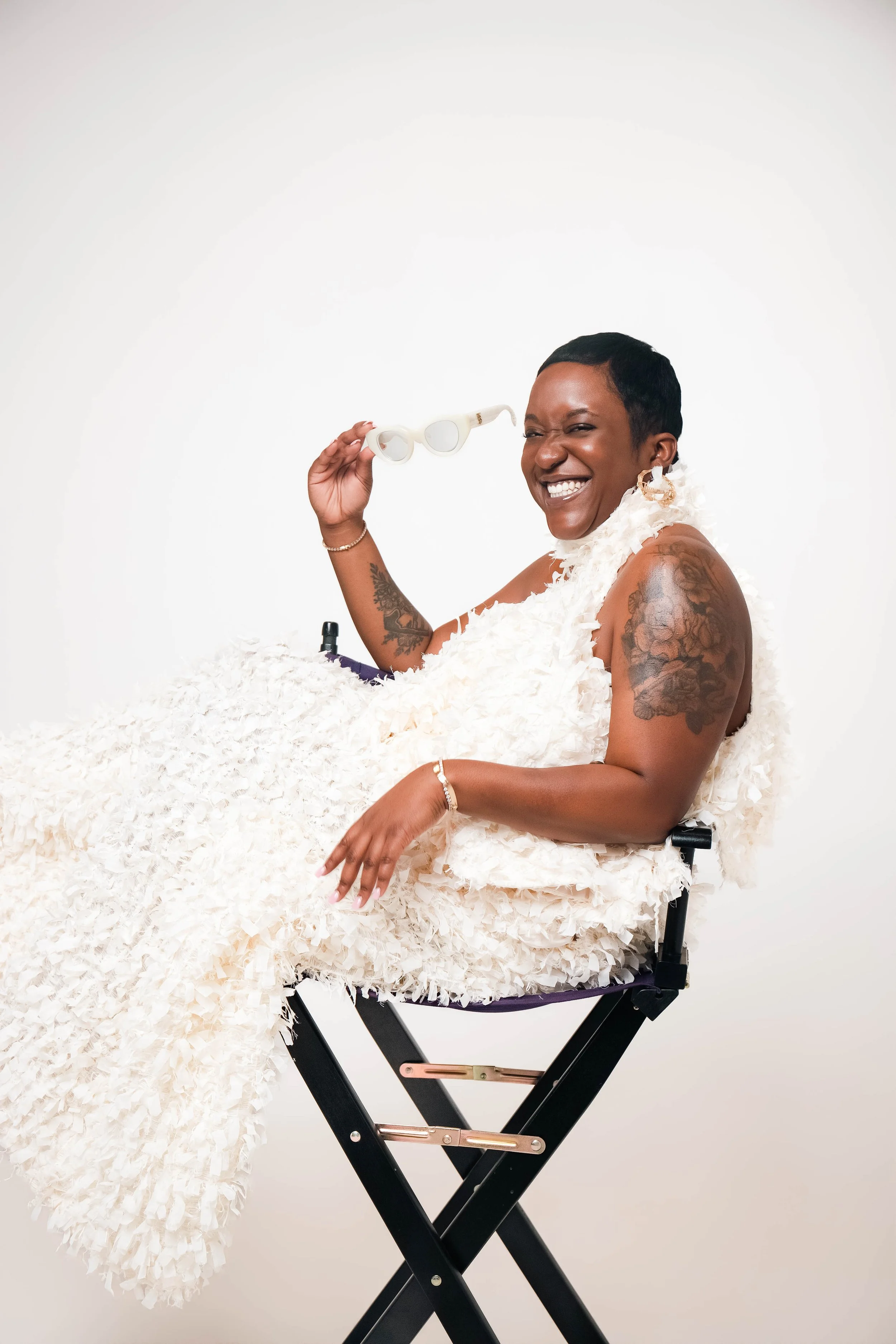
Photo: VisualsbyKYoung
There comes a point when it becomes clear that life was never meant to be navigated in isolation. It is something to be encountered through connection with people, with places, and with purpose. What we carry within us is not accidental. Long before language, before identity, and before the world had the opportunity to define us, something was already set in motion. A way of seeing. A way of building. A way of responding to what exists around us. Not discovered, but remembered.
The Melanated Times exists as a space for that remembrance. A space where attention is returned to what holds weight. Not to spectacle, but to substance. Not to noise, but to intention, because the work that shapes communities rarely announces itself. It moves through individuals who are committed to something beyond recognition, who build with clarity, who move with purpose, and who understand that influence is not defined by visibility but by what endures in their absence.
At its core, this publication is grounded in a simple truth: what is meant for us has already been placed within us. Our gifts, our instincts, our sense of direction, they exist before validation, before acknowledgment, before we ever learn to question them. Like seeds planted with intention, they take root beneath the surface, developing quietly until the moment calls them forward. Growth is not always immediate or linear, but it is always in motion.
The Melanated Times is committed to observing that motion. To highlight those who are actively building within their communities: educators, thinkers, creators, and what I would call community architects, individuals who are engaged in shaping environments that extend beyond themselves. This is not about recognition for its own sake. It is about the work, the structure, and the continuity of impact.
In a time where direction is often shaped externally, there is value in returning inward. Purpose does not arrive fully formed, nor does it exist separate from action. It reveals itself through engagement, through awareness, and through a willingness to show up with intention. Presence is not passive; it is a form of contribution. How we move, how we build, and how we choose to show up all carry weight.
This is not a record of moments for the sake of documentation. It is a reflection of the alignment of individuals stepping into what they are called to do, and in doing so, creating something that holds meaning beyond the moment itself. What is built with care does not end with the individual. It extends into others, into communities, and into futures that have yet to be realized.
The Melanated Times exists to leave an imprint of truth for the people. Not as performance, but as a living reflection of what is taking shape in real time. A record of presence. A recognition of purpose. And a reminder that what we are building today has the capacity to reach far beyond where we stand.